Skip to content
  • Free written quotes
  • Local crews
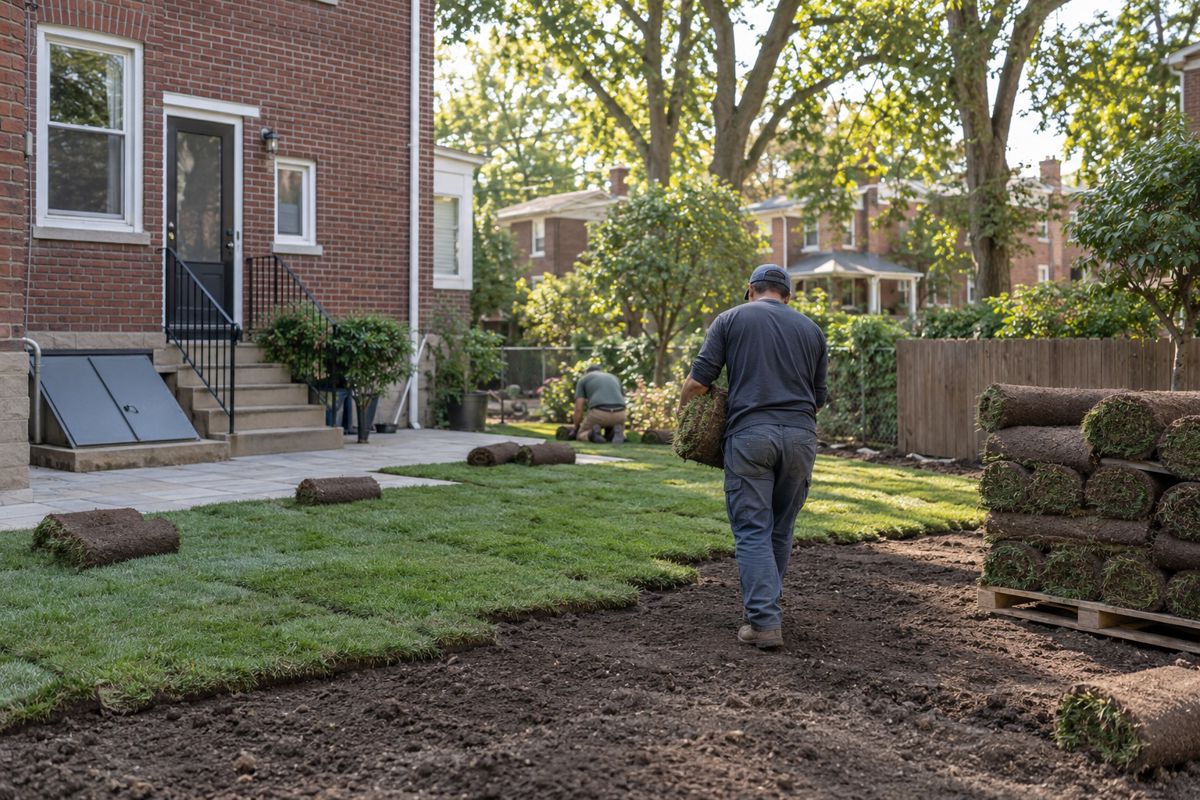
Fresh sod rolls laid on prepared soil behind a brick house

Sod installation in Philadelphia

Sod installation in Philadelphia for a lawn that roots well

Soil prep, grading and fresh sod for rowhouse yards, front lawns and larger properties.

  • Old lawn removed and soil prepared
  • Grass types chosen for sun or shade
  • Clear watering steps after install

What does sod installation in Philadelphia involve?

Sod installation means removing the old lawn, fixing the ground beneath it and laying rolls of live grass so the yard is green within a day. The work under the grass matters most. Skipping it is the usual reason a new lawn fails.

A normal job includes these steps:

  1. Clear the old grass, weeds and debris.
  2. Loosen compacted soil and add compost or topsoil where needed.
  3. Grade the surface so water drains away from the house.
  4. Lay the sod with staggered seams, tight edges and trimmed corners.
  5. Roll it to press roots against the soil, then water well.

On city lots, this often includes hauling away old turf and working around trees, steps and walls.

Which grass is best for Philadelphia, and when should sod go down?

Philadelphia is cool-season grass country. Tall fescue and Kentucky bluegrass blends are common, with fine fescue mixed in for shade. These grasses do their best growing in spring and fall. Our blog post on grass types and sod for Philadelphia lawns goes into more detail.

Early fall is usually the best time to lay sod, because soil is warm and the air is cooler. Spring is also good. Summer installs need a lot of watering and carry more risk in a heat wave. Frozen ground is a poor time for any lawn work. If your yard is mostly shaded, ask about alternatives, since no turf grass does well under dense tree cover.

What changes the price of sod installation?

Prices vary a lot between yards, so we quote after seeing the site. The main factors are:

  • The area to be covered and the shape of it.
  • Removal and disposal of the old lawn.
  • The condition of the soil, and how much compost or topsoil it needs.
  • Grading or drainage fixes. See our drainage page if water sits in your yard.
  • The type of sod and the delivery distance.
  • Access, since a rowhouse with no side gate means more hand work.

Sod costs more than seed up front, but it gives instant cover, holds soil on slopes and avoids weeks of bare ground. Quotes from us are in writing, so you can compare scopes. Compare what each quote includes, such as soil work and hauling, and not only the bottom line, because a low number often leaves out the prep.

Sod arrives on pallets and should go down the same day. The crew finishes the soil prep, then lays the sod in rows, working from one edge to the other. It takes a few hours for a small yard and longer for a big one.

After install, water is the key. Keep the sod moist for the first couple of weeks, checking that the corners and edges do not dry out. Keep foot traffic off it while roots take hold. Then water less often but more deeply to encourage roots to go down. Mow once the sod is firmly rooted and you cannot lift it by a corner. A new sprinkler system can make this much easier, especially in summer.

When is sod the right choice, and when should I call?

Sod suits yards with large bare areas, erosion on slopes, or a deadline such as a sale or a family event. Seed or overseeding can be better for thin lawns or large areas on a tight budget. We help you choose.

Call when your lawn is more weeds than grass, when you have just finished a patio or grading job, or when you want to replace a lawn that has failed in clay soil. Before you hire anyone, ask to see current proof of insurance and ask for their written scope. If you want a complete plan for the yard, visit our landscape design page or go back to the home page.

  • Free written quotes
  • Local crews
  • Reliable scheduling
  • Tidy job sites

How it works

1

Tell us about the yard

Size, goals and any photos.

2

Site visit and quote

We walk the property and put the price in writing.

3

We do the work

Scheduled crew, cleanup included.

Step 1 of 3

What do you need?

Questions about landscaping in Philadelphia

How soon can I walk on new sod?

Keep traffic off for about two weeks, or until the roots have knit into the soil. Walking on loose sod can cause dips and gaps. If you must cross it, lay a board. Pets and children can use the lawn lightly after the first mowing, but heavy use should wait a few more weeks.

Is sod better than seed for a Philadelphia lawn?

Sod gives instant cover and reduces erosion and weeds in the first season. Seed costs less but needs several weeks of careful watering and is best sown in late summer or early fall. Both can work well if the soil is prepared properly. The right choice depends on your budget, timing and yard.

Can sod be laid in summer?

It can, but it needs close care. Heat dries sod quickly, so watering must be frequent and the lawn checked daily. Early fall is safer for most yards. If a summer job cannot wait, plan for an irrigation system or a firm watering schedule and avoid laying sod just before a heat wave.

Will sod grow in shade?

Only in light shade. Fine fescue and shade-tolerant tall fescue blends can handle a few hours of sun a day. In deep shade under mature trees, no turf grass thrives, and groundcover, mulch or paving may be a better choice. We look at the light in your yard before suggesting any grass.

Do I need to remove the old lawn first?

Usually yes. Laying sod over old grass and weeds leaves a weak bond and uneven ground. Removing the old turf lets us fix the soil and set the correct grade. In some cases, such as a thin but level lawn, overseeding may be enough. We tell you what makes sense after inspecting the yard.

Ready when you are Call now or request a quote online. Call for a free quote Get my free landscaping quote (215) 555-0121

Get my free landscaping quote