
Skip to content
  • Free written quotes
  • Local crews
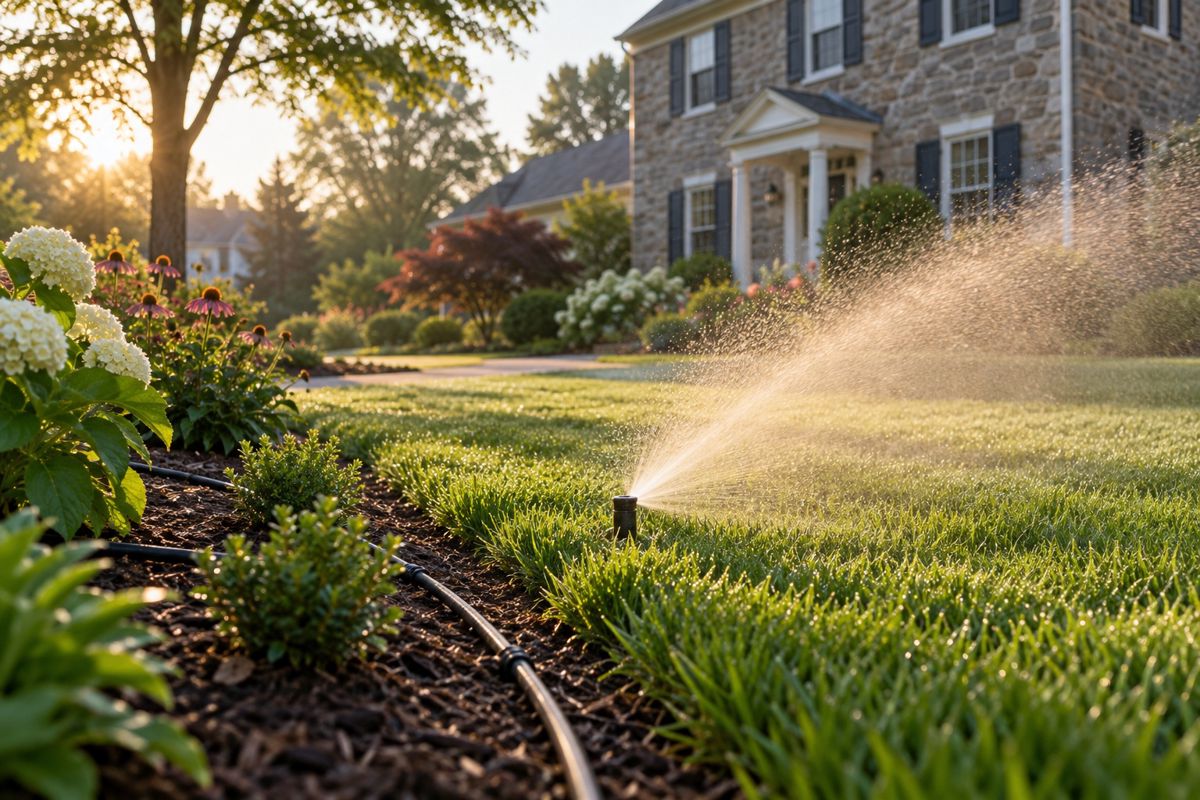
Sprinkler head watering a green lawn beside a drip-irrigated flower bed

Irrigation in Philadelphia, PA

Sprinkler system installation in Philadelphia, sized to your yard

Zoned sprinklers and drip lines for lawns and beds, with a shutdown plan for our cold winters.

  • Zones planned for sun, shade and plant type
  • Drip lines for beds and small yards
  • Seasonal start-up and winter shutdown

Step 1 of 3

What do you need?

What does sprinkler system installation in Philadelphia include?

A sprinkler system puts water where plants need it without dragging a hose around. Sprinkler system installation in Philadelphia usually starts with a plan that divides the yard into zones, since lawns, shaded areas and flower beds need different amounts of water. Then pipes are laid below ground, heads are placed, and a controller sets the schedule.

A typical system includes:

  • A connection to your water supply with a backflow preventer.
  • Valves and zone lines under the lawn.
  • Spray or rotor heads sized to each area.
  • Drip lines for beds, shrubs and tree rings.
  • A smart controller and a rain sensor.

Small city lots often need only a few zones. Larger Main Line yards may need many.

Do Philadelphia lawns really need sprinklers?

Rain falls through the year, but summers often bring dry spells in July and August, and cool-season lawns turn brown or thin when they go without water. New sod and new plantings need steady moisture while roots grow. Clay soil complicates things, because it holds water in some spots but sheds it on slopes.

A good system waters deeply and not often, which builds strong roots. A controller with a rain sensor stops watering after a storm. For a new lawn, pair this page with our sod installation work. Drip lines are a good choice for beds, since they put water at the roots and waste less. You can also read about our overall landscape design service.

What changes the price of an irrigation system?

We quote after seeing the site, because each yard differs. These items change the cost:

  • The size of the lawn and number of zones.
  • The number of beds that need drip lines.
  • Soil conditions and obstacles, such as rock, roots and old pipes.
  • Trenching through a finished patio or walkway, which may need sleeves.
  • The controller, sensors and any smart features.
  • The water connection and backflow device.
  • Permits or inspections, if the city requires them for the connection.

Ask about water billing too. In some places, water used outdoors still counts for sewer charges unless the property has a separate irrigation meter, so check with the Philadelphia Water Department about current rules. Also ask how the zones are labeled and how to change the schedule yourself later.

A small residential system can often be installed in a day or two. Larger yards take longer. The crew marks the layout, trenches or pulls pipe, connects zones, installs heads and tests every zone for coverage and pressure.

Expect some disturbed turf along the pipe lines, although a pipe puller reduces this. We backfill the trenches and level the soil afterward. The best time to install is spring through fall. Winter work is limited when the ground is frozen. We then walk through the controller with you, explain the schedule and show where the shutoff and drain points are. For wet corners or slopes, we may suggest a drainage fix first. Return to the home page to see other services.

Why do I need winterizing, and when should I call?

Water left in pipes can freeze and crack them, so systems here must be drained or blown out with compressed air before the first hard freeze, often in late fall. In spring, the system is turned on, checked for leaks and adjusted. Do not skip this. Burst pipes and cracked valves are a common and avoidable repair.

Call when you plan a new lawn, when your hose routine is not keeping up, when you have a failing system with dry patches or broken heads, or when you want to add drip lines to new beds. Ask any contractor for their license and proof of insurance, and confirm what the work includes in writing.

What you can expect

  • Free written quotes

  • Local crews

  • Reliable scheduling

  • Tidy job sites

How it works

Tell us about the yard

Size, goals and any photos.

Site visit and quote

We walk the property and put the price in writing.

We do the work

Scheduled crew, cleanup included.

Step 1 of 3

What do you need?

Questions about landscaping in Philadelphia

How often should I water a lawn in Philadelphia?

Most cool-season lawns do well with about an inch of water per week, from rain and sprinklers combined. It is better to water deeply a couple of times a week than a little every day. Adjust for heat, soil and rainfall. A rain sensor helps prevent watering after a storm.

Do I need a backflow preventer?

Most sprinkler systems connected to a public water supply need one so lawn water cannot flow back into drinking water. Local plumbing rules set the type and testing. Check current requirements with the city, and ask your installer to explain the device and any inspection that applies.

Can I use drip irrigation instead of sprinklers?

Yes, for beds, shrubs, trees and small planted areas. Drip puts water at the roots and uses less of it. Lawns usually do better with spray or rotor heads. Many yards use both on separate zones, so each area gets the right amount.

When should the system be turned off for winter?

Before the first hard freeze, usually in late fall. The lines are drained or blown out so no water remains in pipes, valves or heads. Do not wait for the first frost warning. Plan your shutdown in advance and book it early, since many homeowners need it at the same time.

Will a sprinkler system damage my existing lawn?

It disturbs a narrow strip along each pipe line. Using a pipe puller or a small trencher keeps the damage low, and the soil is put back and leveled. Grass usually recovers in a few weeks with watering. If you plan a new lawn, installing sprinklers first avoids this entirely.

Ready when you are. Call now or request a quote online.

Call for a free quote
Get my free landscaping quote