
Why does the base matter so much on clay soil?
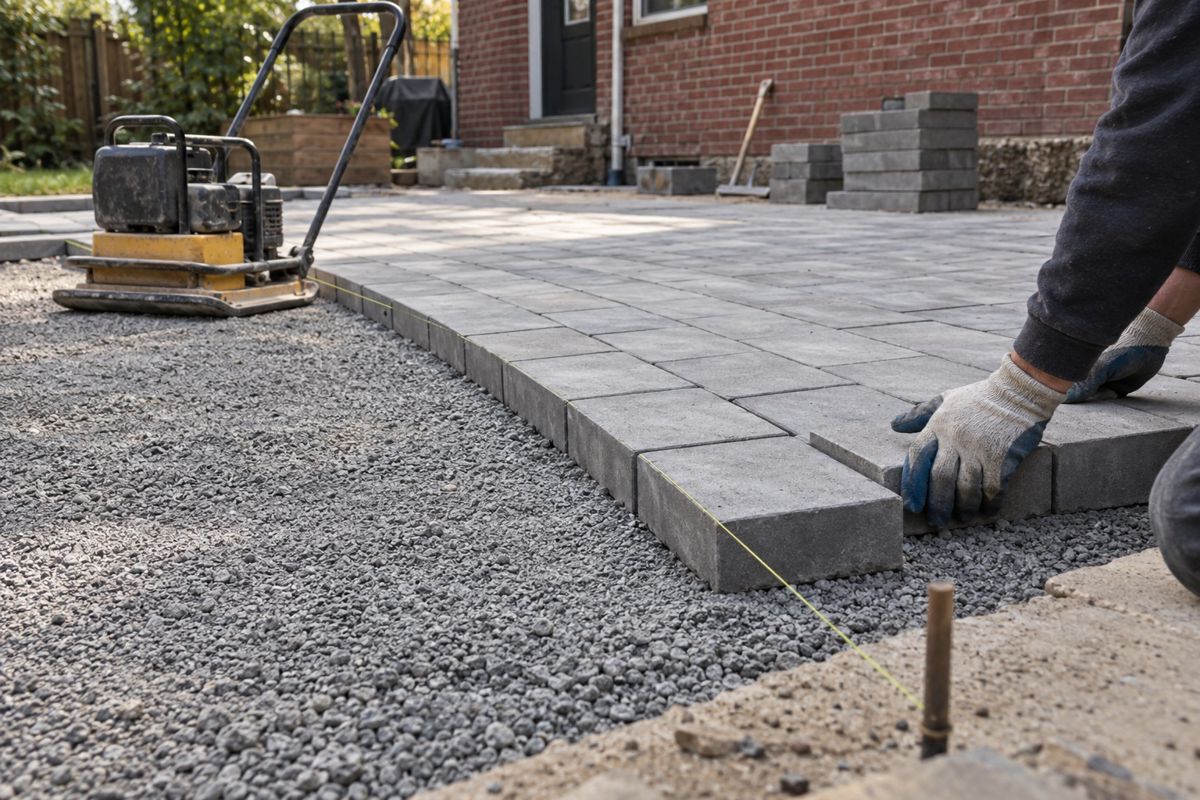
Most paver failures come from what is underneath. Clay holds water. When that water freezes in winter, the ground can heave and shift. Philadelphia has many freeze-thaw cycles in a typical winter, so a thin or poorly compacted base can lead to dips, gaps and rocking pavers within a few seasons.
A good installation removes enough soil, uses clean crushed stone, compacts it in layers and sets a slight slope so water runs away from the house. Where the soil stays wet, extra drainage may be needed. That is why we look at how water moves across the yard before we talk about patterns or colors. Our drainage work often goes hand in hand with paving.