
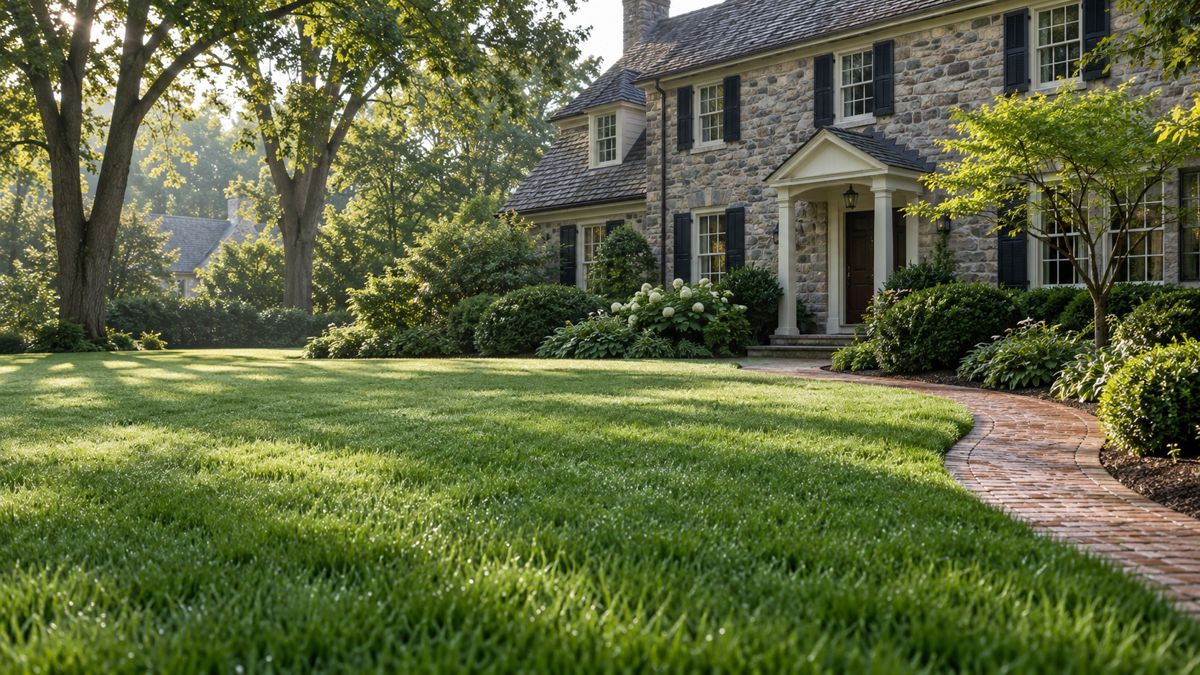
For most Philadelphia lawns, a cool-season blend built on tall fescue, with some Kentucky bluegrass or fine fescue mixed in for shade or looks, is the safest choice. These grasses handle cold winters, humid summers and the heavy soil found in much of the city. The right mix still depends on how much sun your yard gets and how you use it.
What kind of climate are you growing grass in?
Philadelphia sits in a climate with four real seasons. Winters are cold enough to freeze the ground at times. Summers are hot and humid, with stretches of dry weather in July and August and sudden heavy storms. Cool-season grasses grow most strongly in spring and fall and slow down in peak heat. Warm-season grasses such as zoysia can survive here, but they turn brown after the first hard frosts and stay dormant for months, which many homeowners dislike.
Soil matters as much as the weather. Many city yards have heavy clay, or fill that was compacted during construction. Water drains slowly, roots stay shallow and the lawn struggles in a dry spell. A lawn that looks fine in May can thin out by August if the ground underneath is hard.
Which grass types work well in Philadelphia?
Tall fescue
Tall fescue is a common favorite for this region. It has deep roots, handles heat and some drought better than most cool-season grasses, and tolerates moderate shade. Newer turf-type varieties are finer in texture than the old coarse pasture types. It grows in clumps rather than spreading much, so a damaged patch heals more slowly.
Kentucky bluegrass
Kentucky bluegrass gives a dense, soft, dark green lawn and spreads by underground runners, so it repairs itself. It wants full sun, regular water and good soil. In a shaded or dry yard it can look thin. It is often blended with other grasses instead of used alone.
Perennial ryegrass
Perennial ryegrass sprouts fast and is often used in seed mixes for quick cover. It does not take extreme heat or hard winters as well, so it works best as a small part of a blend.
Fine fescues
Fine fescues such as creeping red fescue cope better with shade and poor soil. They want less fertilizer and less water. They are not built for heavy foot traffic.
What about shade and small rowhouse yards?
Many Philadelphia backyards sit between brick walls and under street or neighbor trees. Light can be limited to a few hours a day. For these spots, a shade-tolerant blend with fine fescue and tall fescue usually does better than a sun mix. Grass will still struggle under dense tree cover. In deep shade, it may be wiser to use groundcover, mulch beds or a small patio and keep a patch of lawn where light allows.
Foot traffic, dogs and children also shape the choice. A busy small yard wears out faster than a front lawn that only gets mowed. Tell your landscaper how the space is used before you choose a sod type.
Should you use sod or seed?
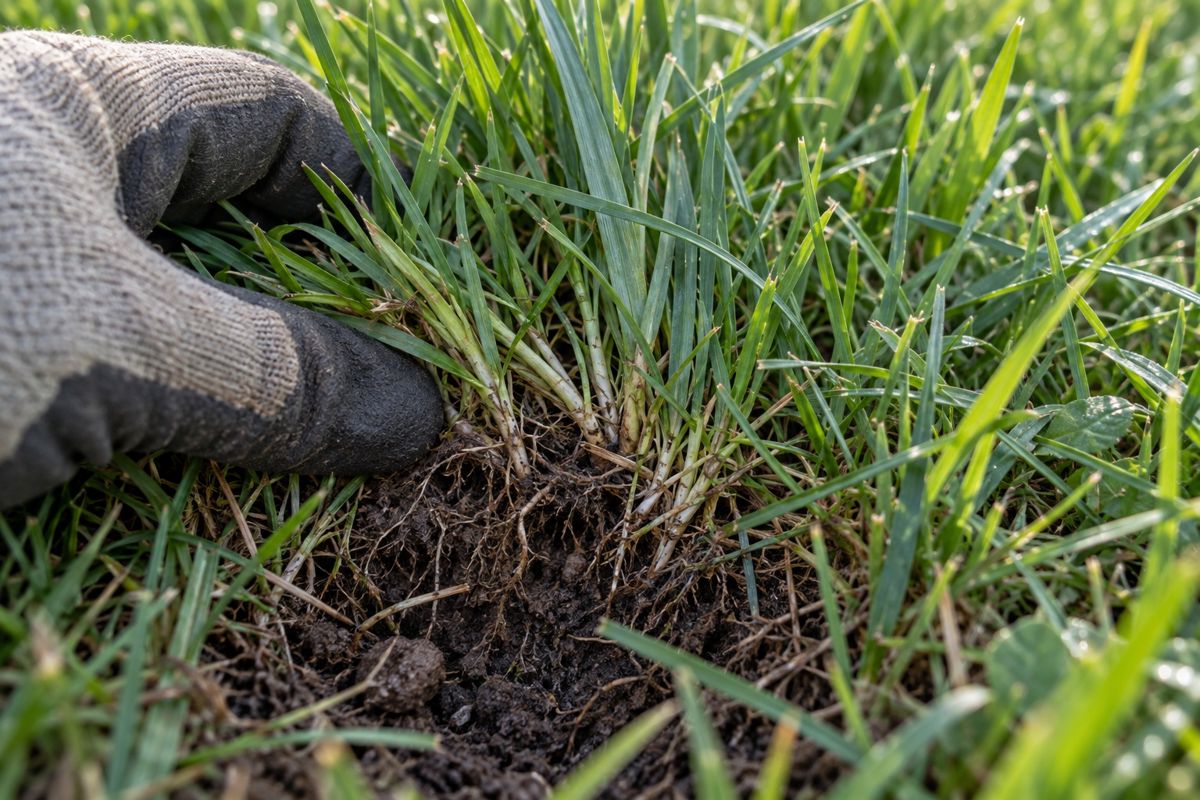
Seed costs less and gives you more variety, but it needs weeks of careful watering and is exposed to washout during storms, weeds and birds. It is best sown in late summer or early fall in this area. Sod costs more up front but gives you a usable lawn much sooner, holds soil on slopes and shows fewer weeds in the first season.
Sod makes sense when you need fast cover, when erosion is a problem, or when you are selling or finishing a larger project. Seed makes sense on large areas where cost matters and you can wait. Either way, the preparation under the lawn counts more than the product on top.
When is the best time to lay sod here?
Early fall is usually the best window. The soil is still warm, the air is cooler and roots grow before winter. Spring is also good, once the ground has thawed and dried enough to work. Summer installs are possible, but they need a lot of watering and carry more risk in a hot spell. Frozen ground is a poor time for any lawn work.
Check the weather before delivery day. Sod is a living product and should go down soon after it arrives, ideally the same day.
How do you prepare clay soil for new sod?
Good prep makes the difference between a lawn that roots and one that peels back.
- Remove the old grass, weeds and debris.
- Loosen compacted ground, ideally several inches deep.
- Mix in compost or topsoil where the soil is very heavy or poor.
- Grade the surface so water flows away from the house and does not collect in low spots.
- Roll or firm the soil lightly so it is smooth and even.
- Lay the sod with staggered seams and tight edges, then water it well.
A basic soil test tells you the pH and nutrient needs, and it is inexpensive. Your county extension office or a local garden lab can point you to one.
For the first two weeks, keep the sod moist and avoid foot traffic. Cut back watering over the following weeks to encourage deeper roots. Wait until the grass can be mowed without lifting before the first cut.
What does sod cost, and what changes the price?
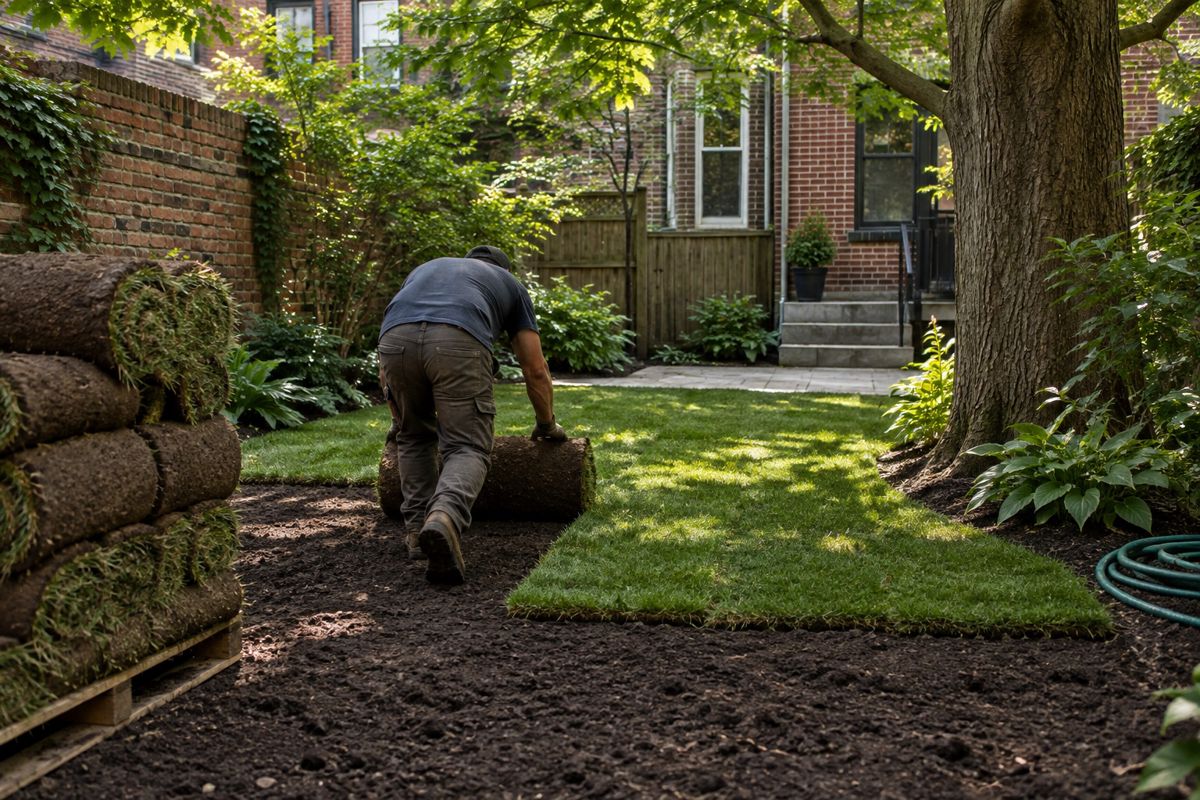
Prices vary a great deal, so use any number you find online as a rough guide only. The main drivers are the size of the area, the type of sod, how much old lawn must be removed and hauled away, how much soil work is needed, and how easy it is to get materials into the yard. A rowhouse with no side access costs more labor to deliver sod by hand than an open suburban lot. Sprinkler lines and edging add to the scope.
Ready to plan your new lawn?
If you want help choosing a grass type, checking drainage or laying new turf, see our sod installation page, or read about sprinkler systems that keep a new lawn watered. Share a few photos and your yard size, and we can walk through the options with you and put a quote in writing.