
Skip to content
  • Free written quotes
  • Local crews
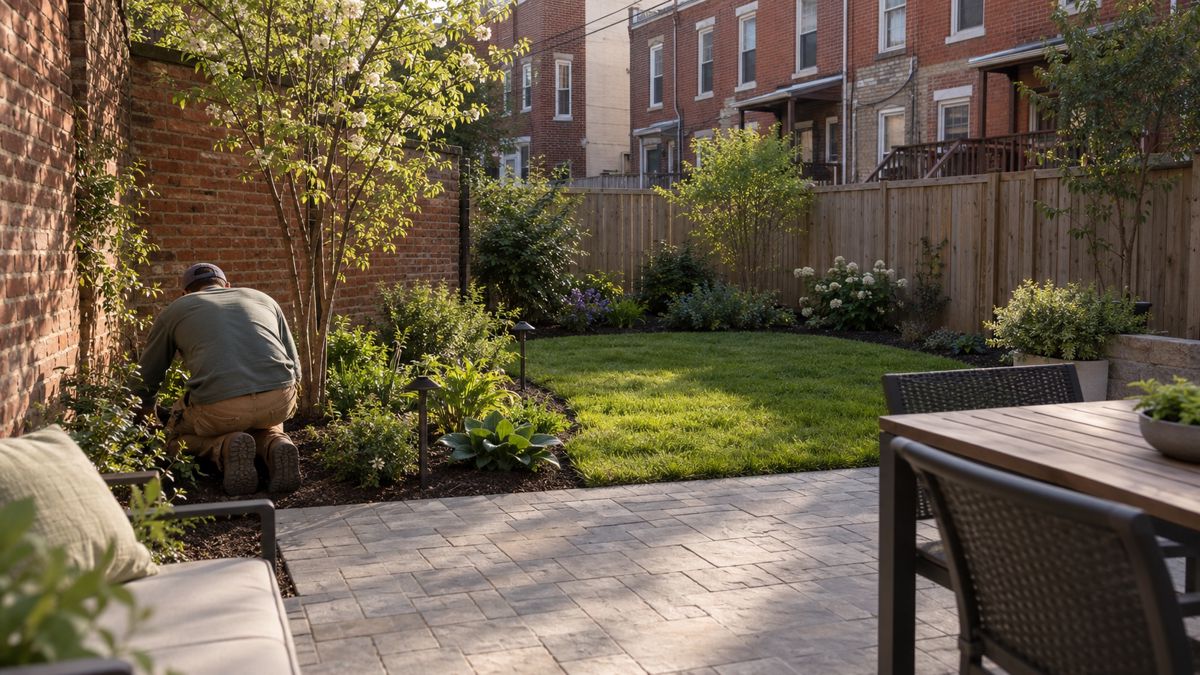
Small rowhouse backyard in Philadelphia with new patio and planted beds

Stone houses, old trees and sloping lots

Landscaping in Chestnut Hill, Philadelphia

Large lots, historic streets and the Wissahickon next door shape every plan. Send a quote request and we will confirm availability for your property.

  • Small city lots and larger suburban yards
  • Design, hardscape, lawns, walls and irrigation
  • Written quotes before work starts

Why Chestnut Hill yards ask for a considered plan

Chestnut Hill is known for stone and brick houses on larger lots, tall mature trees and lanes that wind toward the Wissahickon Valley. A yard here usually has more going on than a plain lawn: terraces, old foundation plantings, a garden wall, perhaps a drive that curves around a specimen tree.

That is why a plan tends to start with what is already there rather than a blank sheet. Trees that have stood for generations cast deep shade and drop a lot of leaf litter, roots reach well beyond the canopy, and long-established beds may hold plants worth keeping. Good work on a property like this reads the existing character first and then adds to it with restraint.

Slopes, shade and the Wissahickon edge

Much of Chestnut Hill sits on rolling ground that falls toward the creek valley. A front lawn may drop toward the street, and a back garden may step down in stages. On slopes like these, water moves quickly during a summer storm and can strip mulch, scour a bed or pool against a foundation.

Deer from the park edge are also a regular fact of life, and many gardeners here choose plants that browsing animals tend to leave alone. Along Germantown Avenue and the side streets, narrow lanes and mature trees can make it hard to bring in a truck, so deliveries of stone, soil or plants are often planned around the street rather than the yard.

Landscaping services for Chestnut Hill properties

We serve Chestnut Hill with five kinds of work, each explained in more detail on its own page.

  • Landscape design: a complete plan for beds, paths, planting and lighting that respects the existing trees and the age of the house.
  • Hardscaping and pavers: terraces, stone walkways and seating areas laid on a firm base so they hold up through freeze and thaw.
  • Sod installation: new turf for lawns that wore out under shade or construction traffic, with a blend suited to partial light.
  • Retaining walls and drainage: walls to hold a sloping garden and drains that carry roof and surface water away from the house.
  • Irrigation and sprinklers: zoned watering for lawns and borders, planned around tree roots and the slope of the lot.

The right mix usually depends on the lot, so we suggest starting with a walk through the property.

Part of Chestnut Hill is a protected historic area, and some exterior changes visible from the street may be reviewed before work begins. Whether your address is affected, and what the city or a local committee would want to see, is something to confirm with them directly. Walls, grading and drainage changes can also call for approval from the city.

Neighbors matter here too, because yards often share fences, hedges and runoff. A wall or regrade that sends water onto the next property causes trouble that outlasts the project. We talk through boundaries and drainage early, and we suggest keeping any paperwork you receive from the city together with your quote.

What shapes the cost and timing of a Chestnut Hill job

The factors that move a project on a property like this are fairly consistent, even if the details differ.

  • Access. Narrow lanes, steps and mature trees can mean hand carrying and smaller machines.
  • Materials. Natural stone, specialty pavers and larger plants each have their own lead times.
  • Tree protection. Digging near big roots calls for care and sometimes an arborist's advice.
  • Season. Spring and early fall are the strongest planting windows, while hardscape can run into late autumn.

We explain these points in the quote so you can see which ones apply.

Asking for a quote for a Chestnut Hill property

Use the quote form or call (215) 555-0121. We serve Chestnut Hill but are not located there, so your request is how we confirm availability.

  1. Tell us what you would like changed and what you want to keep.
  2. Describe the lot: slope, shade, existing walls and any drainage trouble.
  3. Send a few photos taken from the street and from the back garden.
  4. We arrange a site visit, walk the property and take notes.
  5. A written quote follows with the scope and the sequence of work.

For a larger project we suggest a phased plan, so you can spread the work across seasons.

Step 1 of 3

What do you need?

Questions about Chestnut Hill

Can you work around mature trees on a Chestnut Hill lot?

Yes, and in most cases we have to. Roots are shallow and sensitive to cuts and compaction, so we keep excavation outside the critical zone where we can, use hand tools near the trunk and plan paths and patios to flex around them. For a valuable specimen, an arborist's opinion is a sensible step before any digging.

What plants hold up where deer are a problem?

No plant is completely safe when deer are hungry, but many gardeners find that aromatic herbs, ornamental grasses, ferns and some native perennials are browsed less. Tender new growth, hostas and tulips are usually the first to go. We can suggest a mix and, if needed, add fencing or protection around vulnerable beds.

Will new sod grow under the shade of big trees?

It depends on how much light reaches the ground. A shade-tolerant blend does better than a standard mix, but deep shade can still thin a lawn. Sometimes a shade garden, moss or ground cover is a better choice. We check the light during the day before recommending turf at all.

How do you stop runoff from a sloping garden from reaching the house?

The usual tools are regrading to shed water, swales that carry it around the building, drains that collect it and sometimes a wall that breaks the slope into level steps. The right combination depends on where the water comes from and where it can safely go. We trace the path of water during a rain before proposing anything.

Do I need a permit for a garden wall or patio in Chestnut Hill?

It depends on the height, the location and what the work does to drainage. Low garden walls and ground-level patios sometimes need no approval, while taller walls, changes near a property line or work in a historic area can. Check with the city and, where relevant, the local historic body before you commit to a design.

Ready when you are Call now or request a quote online. Call for a free quote Get my free landscaping quote (215) 555-0121